The Role of X-Rays in Pediatric Dental Care
X-rays play a vital role in detecting and monitoring dental problems in children, and in this article, we’ll explore why X-rays are essential, the different types of X-rays used in pediatric dentistry, and the safety of X-rays.
Why Are X-Rays Important in Pediatric Dentistry?
X-rays are an essential tool in pediatric dentistry because they allow dentists to see what’s truly happening inside a child’s mouth, beyond the surface level.
This includes tooth roots, the jawbone, and other structures that are not visible during a regular pediatric dental exam. This is especially important in pediatric dentistry because children’s teeth and jaws are still developing, so early detection of dental problems can prevent more significant issues in the future.
Types of X-Rays Used in Pediatric Dentistry
There are several types of X-rays used in pediatric dentistry, and each serves a specific purpose. Here are the three most common types of X-rays:
Bitewing X-rays
Bitewing X-rays show the upper and lower back teeth and are used to detect decay between the teeth. These are the most common X-rays taken, typically in a route fashion.
Periapical X-rays
Periapical X-rays show the entire tooth from the crown to the root and are used to diagnose problems with the root of the tooth, such as gum disease. These X-rays showcase the bone structure beneath the gums, including permanent teeth that haven’t yet erupted.
Panoramic X-rays
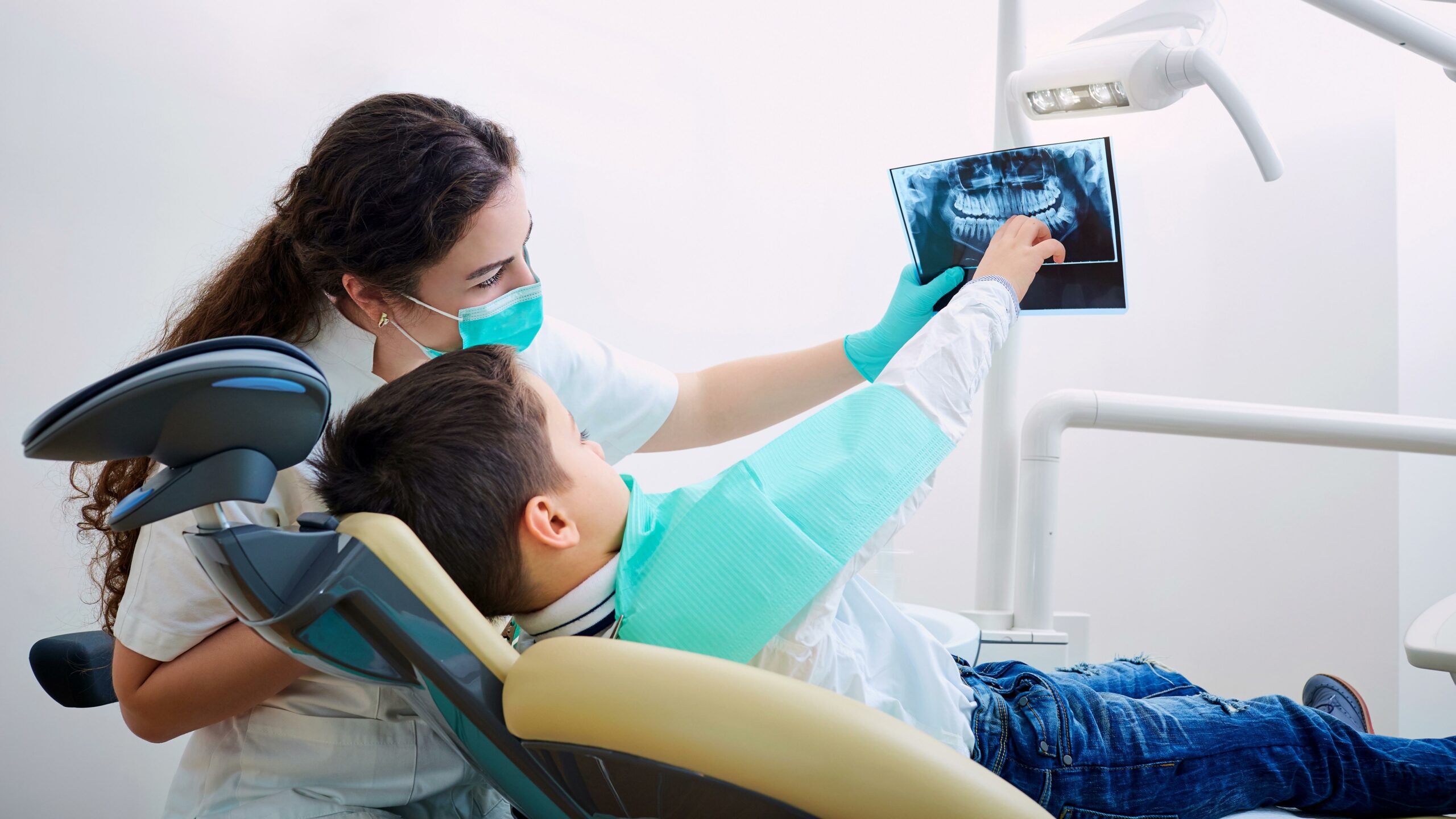
Panoramic X-rays show a broad view of the entire mouth, including the teeth, jawbone, and sinuses. They are often used to evaluate growth and development, and to detect problems with the jawbone or wisdom teeth. These X-rays assist pediatric dentists in evaluating your child’s teeth, and when necessary, pre-planning for early orthodontic treatment.
The Safety of X-rays Used in Pediatric Dentistry
Are X-rays safe for children? The simple answer is “yes”. When we hear “radiation”, alarm bells tend to go off in our heads, especially when our kids are considered. But rest assured, modern X-rays use an extremely small amount of radiation – much less than when you (the parent) were a child. Learn more about X-ray safety directly from the American Dental Association:
The Safety of X-Rays, Brought to You By the ADA:
“The amount of radiation used to obtain dental radiographs is very small. For example, bitewing radiographs—two to four images of the back teeth—expose a patient to about 0.005 millisieverts (mSv) of radiation (a millisievert is a unit of measure). By comparison, because radiation is part of our environment, people in the United States are exposed, on average, to 3.2 mSv every year from background sources of radiation. Dentists follow the ALARA principle, which stands for “As Low As Reasonably Achievable,” when obtaining radiographs. This radiation safety principle limits your exposure by incorporating the following techniques:
- Use of the fastest image receptor (that is, the fastest film speed or digital speed).
- Reduction in the size of the X-ray beam to the size of the image receptor whenever possible.
- Use of proper exposure and processing techniques.
- Use of leaded aprons and, whenever possible, thyroid collars.”
Sources: The American Dental Association and the American Nuclear Society.
It’s also important to note that the benefits of X-rays in pediatric dentistry far outweigh the potential risks. X-rays can help dentists detect and monitor dental problems early on, which can prevent more significant issues in the future.
How Often Should My Child Have Dental X-Rays Taken?
The exact schedule for X-rays will vary depending on your child’s individual needs. Regular visits, on the other hand, should occur every six months, starting at your child’s first tooth eruption or their first birthday – whichever happens first.
Keep in mind, the enamel on your child’s teeth is thinner than adult teeth. This means that if decay is present, it will spread more quickly than it would in permanent teeth. The American Academy of Pediatric Dentistry recommends X-rays for children with a high risk of tooth decay routinely (every six months). For additional information, check out another blog from our team: Dental X-Rays and Your Child.
Schedule An Appointment Today
Routine dental visits are very important for your child’s oral health and overall well-being. At Pediatric Smiles in Kansas City, we are devoted to kids and their families. Whether it’s your child’s first dental visit or their twentieth, you’ll be greeted with a friendly smile from our entire team of pediatric dental experts. Schedule an appointment today!